“Rare” Planetary Alignments
Astronomical Clickbait?

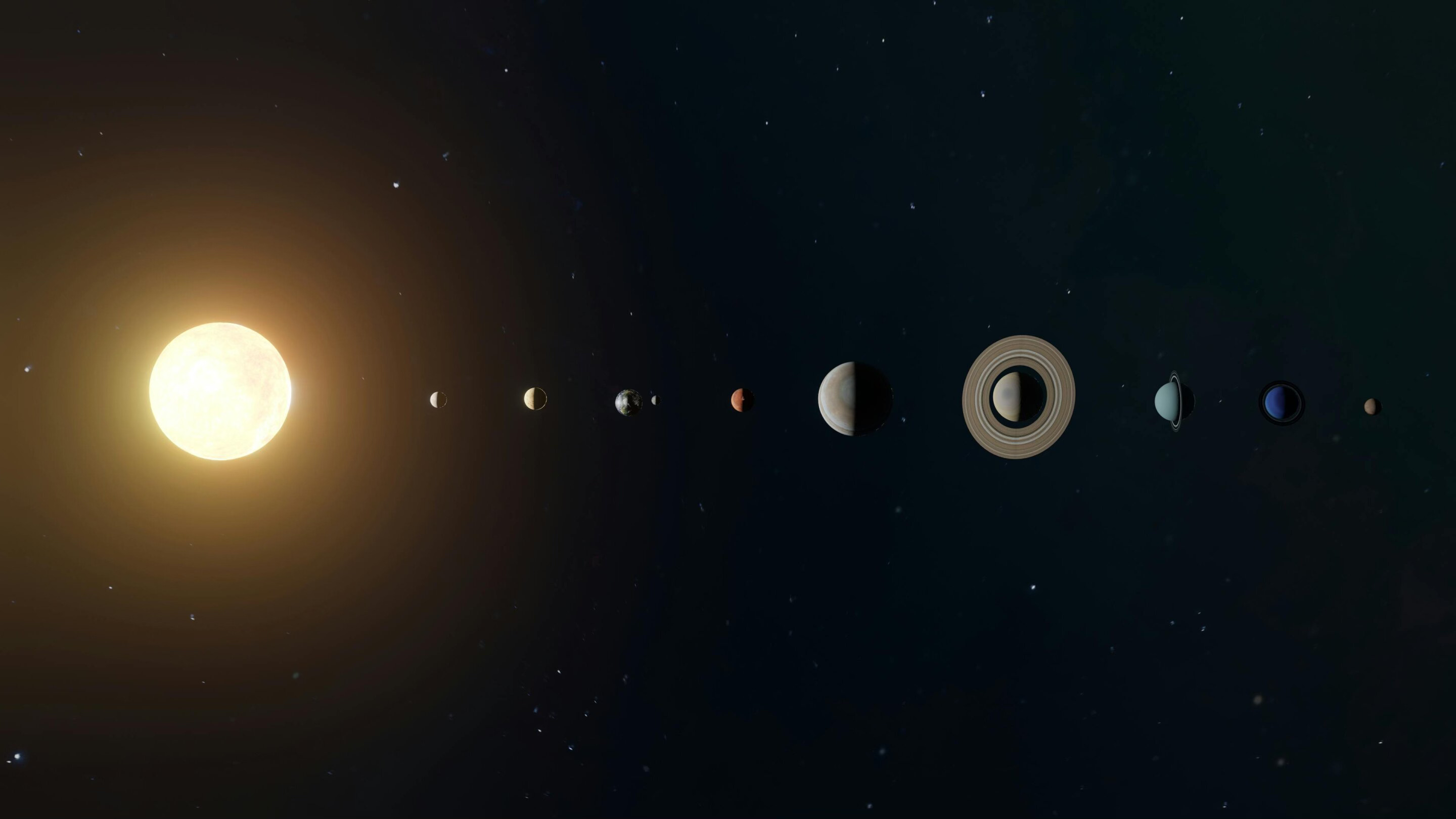
YOU MAY HAVE NOTICED media articles over the past several years referring to a “parade” of several planets, aligned in the same night. Chances are, the article will show a graphic of the planets in a straight line and refer to this as a “rare event.” I first became aware of this phenomena in 1999 when a person told me “all” the planets were aligned, in which he ascribed an ill-defined astrological significance. But over the years, I kept seeing the same story in the media, which made me wonder if they were engaging in astronomical clickbait.
First, let’s talk about the significance of planetary alignments. “Planetary parades” naturally occur from our vantage point on Earth, rather than the planets’ actual location in the Solar System. Mercury and Venus, being close to the Sun, wander rapidly in our sky and are mostly visible near sunrise and sunset. This sets the conditions for any “parade”—namely, whether they happen in the morning or evening. Further out in the Solar System, Mars has favorable appearances (called oppositions) approximately every twenty-six months, but is still visible in between these periods. If you believe in the significance of planets appearing in certain constellations from Earth’s perspective, these factors are important. Otherwise, not so much.
However, we should temper our expectations of the celestial display of these events. Mercury will be visible only briefly above the horizon. Uranus, for the most part, requires binoculars or a telescope since it is barely visible to the naked eye, even under dark skies. Neptune always requires optical aid. In other words, one should not expect a dazzling parade.
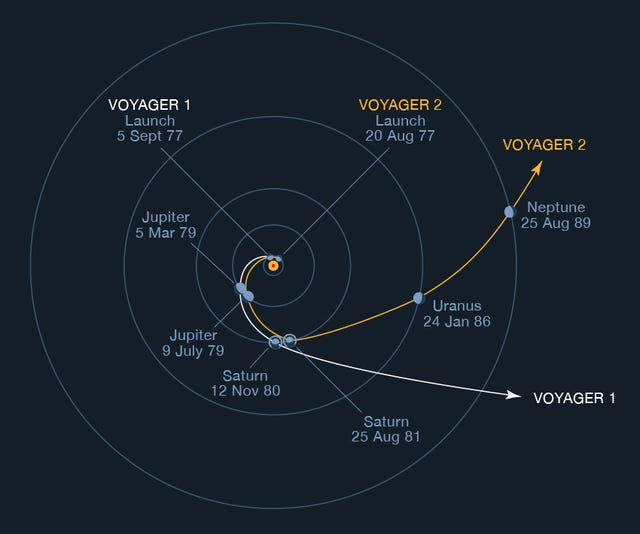
A more practical aspect of planetary alignment involves spacecraft launches from Earth. The Voyager probes launched in 1977 benefited from an alignment occurring once every 176 years that allowed a gravity assist “slingshot” to save fuel. The optimal launch window for Mars missions is during opposition. The New Horizons probe that explored Pluto in 2015 had a thirty-five-day window in early 2006 to take advantage of a Jupiter gravity assist.
What about the supposed rarity of the planetary alignments from Earth? Given the plane of the planets’ orbits around the sun, they move along the ecliptic—an imaginary line (at 23.5 degrees) that traces the annual path of the Sun across the celestial sphere. However, the planets do not always appear in a straight line from our perspective given their actual placement in the Solar System. The frequency of planetary alignments has increased recently with Jupiter and Saturn being visible in the same night sky. In the outer reaches of the Solar System, Uranus and Neptune move more slowly from our perspective owning to their greater distances, but they will be in a similar part of the sky for decades to come. Bottom line: the alignment of multiple planets from our vantage point is NOT rare—at least not for the foreseeable future.
In terms of the so-called planetary parade, we should save the “rare” adjective for actual rarities, such as March 15, 2080, when six planets will be visible in the morning sky, including a Jupiter and Saturn conjunction requiring a telescope to resolve. In case you were wondering, the next time all eight planets will be within the same 180-degree patch of sky will be 2492.
Whether or not the media is engaging in clickbait, I’ll let you decide. In a similar vein, each lunar cycle they regale us with exotic names for full Moons—presented as if each one is unique, and often in hyper-local detail:“How to see the Strawberry Moon from Detroit!” But we’ll save that for a future discussion.
As an avid amateur astronomer, I am reluctant to criticize media that encourage people to get outside and observe the sky. However, I would prefer news outlets not resort to clickbait titles, or falsely label these events as rare. After all, to appreciate science is to appreciate the nuance of truth. I won’t hold my breath waiting for the clickbait model to change. In the meantime, there is more than a lifetime’s worth of celestial objects and events to see.
Note: Just as I finished typing this, a family member texted me asking if I watched the planets align last night.
The following is a representative sample of “rare planetary alignment” articles. Most of these events have several mentions, ranging from the smallest to the largest media outlets.
Jan 28, 2026: Six planets due to parade across night sky in rare celestial spectacle
August 20, 2025: How to Watch Rare 6-Planet Parade That Won’t Happen Again Until 2028
May 29, 2024: All About June’s Rare 6-Planet Alignment, Including How to See the ‘Parade of Planets’
March 21, 2023: Rare Cosmic Event Will See 5 Planets Align in The Sky. Here’s How to Watch
June 2, 2022: See 5 planets align in the night sky this month in a rare treat!
March 10, 2021: A Rare Astronomical Phenomenon of Three Planets Aligning Occurs This Week
April 16, 2020: Watch for rare Moon, planets alignment early Wednesday morning
Oct 11, 2018: Planets Venus, Mercury, Jupiter, Mars and Saturn align in the night sky
Sept 23, 2017: USM astronomer: No need to fear rare planetary alignment
Jan 20, 2016: Morning sky hosts rare dance of the planets
April 1, 2015: Rare Planet Alignment Occurs Today, Changes Flow of Water - Toilet Bowls to Switch Direction due to Unique Planet Alignment
I agree 100%. These articles are clickbait (bad) but they get people looking up at the sky (good). While not rare, the predawn show in June 2022 was a good one as all of the planets were easily naked eye except for always-low Mercury. This time, the only planet that was easy to see was Jupiter, which I'm guessing left a lot of people asking 'where are they?' since most non-science media outlets fail to go into any depth.